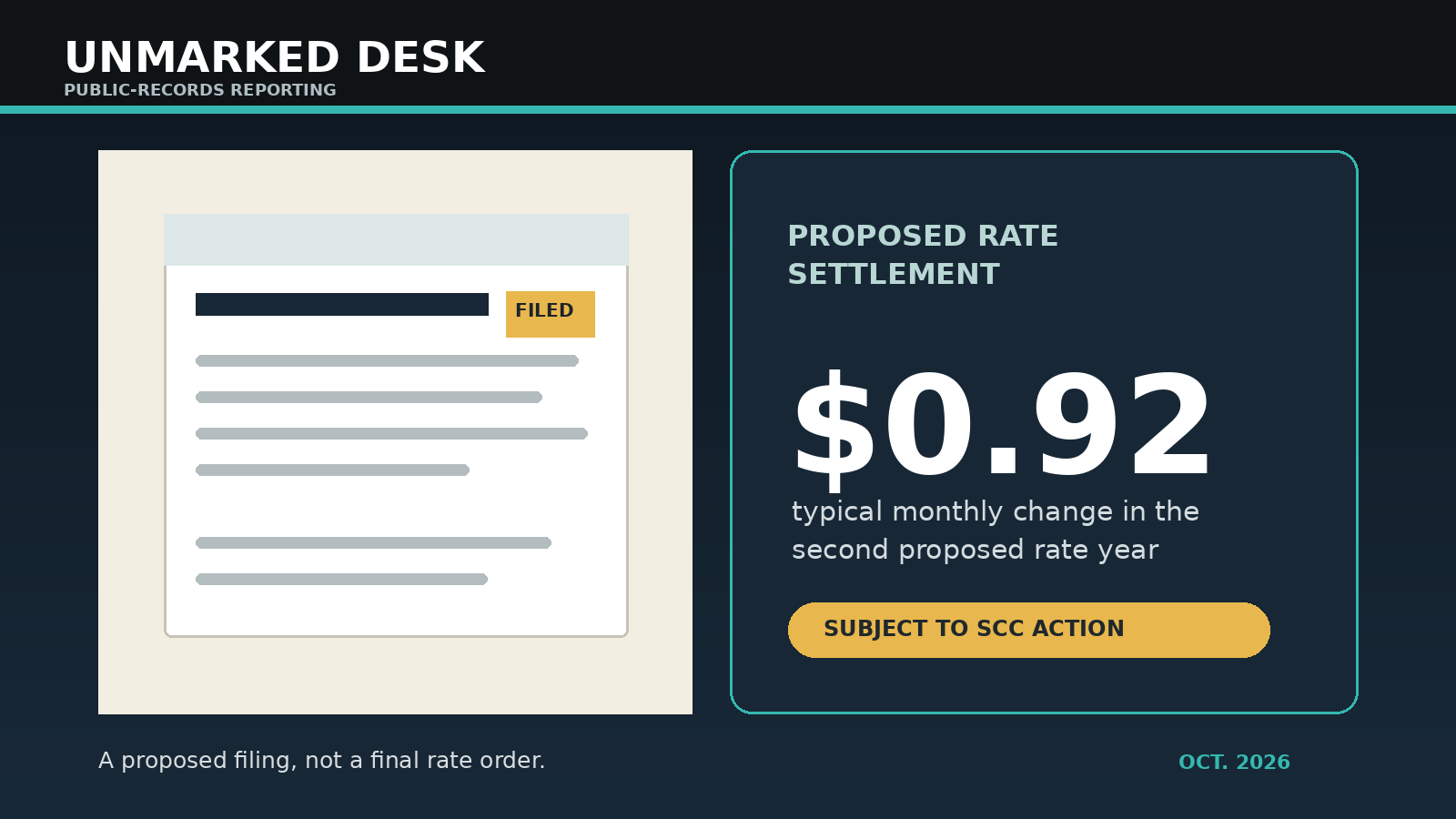
A proposed settlement in Appalachian Power’s Virginia rate review would leave a typical residential bill unchanged during the first rate year and raise it by about 92 cents a month in the second, according to a filing with state regulators.
The estimate applies to a residential customer using 1,000 kilowatt-hours a month. The State Corporation Commission must approve the settlement before its terms can take effect.
The proposal comes ahead of hearings set for October 19 and 20 in the company’s 2026 base-rate review. The SCC’s June hearing order scheduled telephone testimony from public witnesses for October 19 and an evidentiary hearing for October 20.
What would change on residential bills
Under the settlement, typical residential bills would remain unchanged from March 1, 2027, through February 29, 2028. A one-year reduction in residential revenues would offset changes in how generation and distribution revenues are allocated among customer classes.
That temporary reduction would end in the second rate year, March 1, 2028, through February 28, 2029. The filing puts the resulting increase for a residential customer using 1,000 kilowatt-hours a month at an average of about 92 cents per month.
The residential customer charge would remain $7.96 a month. The estimates describe the settlement’s effect, not a guarantee that every component of a household’s future electric bill would stay the same.
Appalachian Power submitted the corrected motion and stipulation on October 14 in Case No. PUR-2026-00044. The Commission must issue its final order by January 15, 2027. Any rate revisions ordered in the review cannot take effect before March 1, 2027.
Separate case would address large electricity users
The settlement also calls for Appalachian Power to file a separate large-load rate-class case within 90 days. That filing would include an option for customers to fully fund the transmission and distribution infrastructure they need.
Customers covered by the company’s large-load special terms would also have an immediate option to pay the full construction costs of substations and radial lines needed to connect them, through what the filing calls a Contribution in Aid of Construction.
Those provisions offer a way for large users to pay for infrastructure serving them; they do not require every large-load project to do so. The design of the separate rate class would remain subject to that proceeding and Commission action.
Source records
- Corrected Motion to Accept Stipulation and Stipulation, filed October 14, 2026, PUR-2026-00044
- SCC Order for Notice and Hearing, PUR-2026-00044
Source note: Reporting is based on the linked SCC records, checked October 18, 2026. Updated October 18 to improve the headline, lead and organization; the reported settlement terms are unchanged.